
The Complexity of Canine Behavioral Modification
Teaching a dog to sit and resolving a dog who shreds furniture every afternoon are not the same project. The first is obedience. The second is behavioral modification, and it operates on entirely different terrain.
Obedience builds a vocabulary. Behavioral modification asks a harder question: why is this animal doing what it does, and what unmet need is the behavior trying to satisfy? Before any intervention earns a place in the plan, the dog's world has to be mapped.
That mapping is unglamorous work. The assessment phase involves logging the dog's daily routine in something like 15-minute increments to catch trigger stacking before it spills over into a destructive episode. A baseline observation period of seven to ten days usually precedes any active intervention. Skip this, and you are treating symptoms blind.
The clinical posture here matters. Assess first, hypothesize, then implement. A behavior that looks identical across two dogs can carry two unrelated causes, and the only way to separate them is to watch carefully before acting.
Analyzing the Root Causes of Destruction and Biting
Furniture destruction and biting incidents tend to get lumped together as "bad behavior." That label explains nothing. The psychological drivers underneath them — teething, anxiety, sheer under-stimulation — pull in different directions and demand different responses.
Practitioners read the evidence the dog leaves behind. Bite inhibition gets graded on a common six-level pressure scale. The texture of destroyed items gets categorized too: textiles, hard plastics, wood. A dog working through wooden chair legs is telling a different story than one shredding soft cushions, and the materials become a diagnostic clue rather than just a mess to clean up.
Breed-specific traits complicate the picture further. A working breed denied a job will invent one, and the invented job is rarely something the household appreciates.
On the question of punishment, the academic consensus is settled and worth stating plainly. Punitive measures suppress the visible behavior without touching its source, and they frequently add a layer of fear that makes the underlying problem worse. Positive reinforcement paired with cognitive redirection does the durable work — it gives the drive somewhere productive to go.
Case Study 1: Bernie the Beagle's Behavioral Challenges
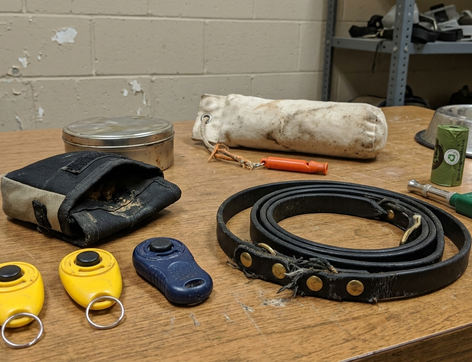
Bernie arrived as a textbook case of mismatch between breed and environment. A beagle living a quiet indoor life, he had begun destroying furniture and snapping when interrupted.
Beagles carry an enormous olfactory drive. The nose is not a hobby for this breed; it is the central organ of engagement with the world. Deny that nose meaningful work, and the energy reroutes — often into the nearest couch cushion.
The numbers told a tight story. Based on participant logs, over a 14-day stretch, Bernie destroyed three couch cushions and two wooden chair legs. The incidents clustered with unusual precision, peaking between 4:00 and 6:00 PM. That window pointed straight at an afternoon energy surge with no outlet.
His owners first reached for bitter apple spray on the furniture. Bernie, to their dismay, seemed to enjoy the taste. They dropped the spray and pivoted toward full environmental management, which turned out to be the better instinct.
Implementation and Results: Redirecting Bernie's Drive
Trainer Donna built the intervention around a simple premise: do not fight the foraging drive, feed it.
The destructive chewing got replaced with structured scent work. High-value treats were hidden inside cardboard boxes, turning Bernie's afternoon into a search-and-find puzzle that satisfied exactly the instinct his quiet home had starved. Two ten-minute scent work sessions ran each day, with one deliberately placed inside that volatile late-afternoon window.
The plan layered impulse control on top of the foraging outlet, so Bernie learned to wait for the search to begin rather than barge into it.
Qualitative outcomes
The results held. Across a six-week monitoring phase, zero furniture destruction incidents were recorded. The biting, which had always been a guarding-and-frustration response rather than aggression, faded once Bernie had a legitimate job. The household furniture survived, which the owners counted as the headline result.
A high-drive working breed does not need less stimulation. It needs the right kind, delivered on a schedule that anticipates its peaks.
Case Study 2: Archie and the Complexity of Senior Dog Training
Archie's case looked nothing like Bernie's, and that contrast is the point. He was a senior dog whose behavior had shifted suddenly — pacing and vocalizing between 10:00 PM and 2:00 AM, disrupting the entire household's sleep.
With a senior dog, the first move is not training. It is ruling out medicine. Archie went through a veterinary geriatric screening that included a full blood panel and a joint mobility assessment, specifically to exclude osteoarthritis or cognitive dysfunction syndrome before anyone reached for a behavioral plan.
This sequence guards against a costly error. Assuming a senior dog's sudden aggression or restlessness is a training problem, when it actually traces back to undiagnosed dental pain or arthritic joints, wastes weeks and can deepen the dog's distress. The neurological changes associated with canine aging can mimic trainable habits closely enough to fool an experienced eye.
Distinguishing medical-induced change from a learned pattern is the central challenge of senior behavioral work, and it cannot be rushed.
Adapting Methodologies for Archie's Success
Once screening cleared the most serious medical flags, Donna's approach changed character entirely. Where Bernie needed active redirection, Archie needed predictability.
The plan moved away from physical redirection toward a stable, repeating evening structure. A wind-down protocol of somewhere around 45 minutes anchored the night, signaling to an aging nervous system that the day was closing. Target training continued, but on orthopedic mats and capped at three to five minutes per session, give or take, to prevent physical fatigue.
This is the context-dependent variation worth remembering. High-drive working breeds respond to cognitive challenge; senior dogs with anxiety respond to routine and environmental predictability. The same trainer, the same toolkit, two opposite emphases.
Archie's nighttime pacing settled as the routine took hold. The household regained its sleep, and his behavioral baseline stabilized into something the family could live with comfortably.
Critical Insight: Match the intervention to the dog's stage of life and drive profile, not to a generic behavior label. The destruction Bernie and the pacing Archie shared a chart heading and almost nothing else.
Scope and Limitations of Behavioral Interventions
Behavioral modification is not a universal cure, and presenting it that way does owners a disservice. Its success depends heavily on strict, daily owner compliance — the protocol only works if it runs every day, not on the days that happen to be convenient.
Timelines deserve honesty too. A workable estimate comes from multiplying how long the dog has practiced the unwanted behavior by a factor of environmental consistency. For genuinely ingrained habits, that means a commitment of eight to twelve weeks, more or less, supported by daily compliance tracking logs.
Risk Factor: Underlying neurological or physiological conditions cap what training can achieve. For senior dogs with diagnosed cognitive dysfunction, the protocol shifts deliberately toward management and harm reduction rather than active retraining. Pushing for full behavioral reversal in those cases sets everyone up for disappointment.
Realistic expectations are not pessimism. They are what keep an owner committed through the slow middle weeks when progress is real but quiet.
Synthesizing Theory into Practice
Two dogs, two methodologies, one underlying principle. Bernie succeeded because his beagle drive was channeled into scent work instead of suppressed. Archie succeeded because his aging system was given a predictable scaffold instead of more stimulation. Neither would have improved on a generic obedience template.
The throughline is the context-first plan. Map the routine, rule out medicine where age or sudden change demands it, then build an intervention shaped to the individual dog.
Recommendation: As behaviors stabilize, transition off the rigid daily schedule. After a sustained run of about thirty consecutive days of success, move to a variable reinforcement schedule and fold the new habits into ordinary daily life. Follow-up assessments every couple of months catch any drift before it becomes a relapse.
If you are staring at a shredded cushion or a dog pacing the hall at midnight, take heart. The behavior is information, not a verdict. Read it carefully, gather your baseline, and the path forward usually becomes visible.
Pre-Consultation Data Gathering for Owners
- Log of incident times over a 7-day period, more or less
- Description of the dog's body language immediately prior to the incident
- List of any recent household changes (new schedules, visitors, diet changes)
- Video recording of a typical episode, captured at a safe distance