Boundary training reads simply on paper: the dog goes to a bed, stays there, and waits for a release word. In a single-dog home, that description holds up. In a household with two, three, or four dogs sharing one hallway and one front door, the same cue becomes a coordination problem involving arousal, spacing, and sequencing. The training itself does not change much. The timeline does.
What the Boundary Cue Actually Asks a Dog to Do
The place command is a sustained duration behavior. The dog moves onto a defined surface, remains inside that spatial boundary, and stays there until a release cue ends the obligation. Position within the boundary is negotiable. Departure from it is not.
This is where the cue separates from a standard down or stay. A down asks for a posture. A stay freezes whatever posture already exists. Place asks for something closer to an emotional state: the dog holds a territory and, ideally, decompresses inside it. Field practice has moved steadily in this direction. Rather than enforcing a rigid sphinx position, experienced trainers now reward the physiological markers of settling — a weight shift onto one hip, a chin dropping to the surface, a long exhale. A dog that softens is learning the assignment. A dog locked in a tense, compliant down is merely enduring it.
The physical boundary does real cognitive work here. An elevated bed with a four-inch to six-inch height differential from the floor gives the dog a tactile edge it can feel without looking. That edge functions as an anchor. The dog knows where the obligation begins and ends, which removes the constant low-grade guessing that erodes duration work on a flat mat.
Duration builds in measured increments. An initial target of just over 30 seconds is appropriate for a naive dog; a mature, well-conditioned behavior can hold for a sustained 45-minute relaxation period while the household moves around it.
Settling Over Stillness
Reward the hip roll and the chin drop before rewarding duration. A dog that relaxes on the boundary generalizes faster than one that simply holds a rigid posture under pressure.
How One Dog's Arousal Travels Through the Whole House
Social facilitation explains most multi-dog chaos. One dog reacts; the others adopt the reaction without ever identifying the original trigger. The second and third dogs are not responding to the mail carrier. They are responding to the first dog.
Behavioral consultants working these cases typically map the chain reaction before touching a training plan, identifying the primary instigator and addressing that dog's arousal directly instead of trying to suppress every secondary response at once. Managing the instigator collapses the chain. Managing the followers does nothing while the instigator keeps firing.
Three catalysts account for most indoor escalation:
- Threshold events. Knocks, doorbells, and arrivals produce arousal spikes concentrated within a six-foot to eight-foot radius of high-traffic entryways.
- Meal preparation. Predictable food sequences create anticipatory crowding in kitchens, where dogs orbit the same two square metres of floor.
- Barrier frustration at windows. A dog that cannot reach what it sees accumulates stress with no resolution available. Cortisol dissipation after such an event requires roughly 15 to 20 minutes of quiet before the dog returns to a workable baseline.
That recovery window matters operationally. Running a place session immediately after a window-barking episode means training a chemically agitated animal. The repetitions will look poor, and the dog will absorb the wrong association with the bed.
Shared living space compounds all of this. Without designated, independent resting zones, dogs default to whichever spot is warmest, closest to the human, or most defensible. Competition follows. Assigning each dog a permanent boundary removes the negotiation entirely.
Why Housemates Stretch the Generalization Curve
A single dog working in isolation typically generalizes the place cue across contexts in 14 to 21 days of consistent, short sessions. Adding a freely moving housemate extends the work substantially: proofing the behavior while another dog circulates around the bed generally requires 6 to 8 weeks of staggered exposure.
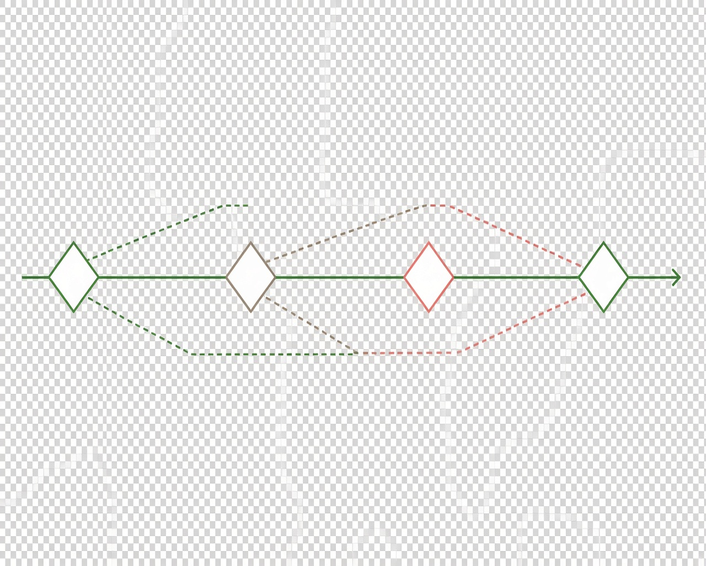
These figures describe trajectories, not guarantees. Breed traits, age, and prior reinforcement history all shift the curve. A four-year-old dog with a long history of rewarded settling may compress the isolation phase considerably, while an adolescent herding breed with a high orienting reflex may need the full range and then some.
One scope condition deserves emphasis. The multi-dog projections above assume no dog in the household has a clinical history of resource guarding the physical place boards. Where severe guarding exists, a separate counter-conditioning protocol has to run to completion before spatial boundaries are introduced at all. Beds are resources, and a resource with a clear tactile perimeter is precisely the kind of thing a guarding dog will defend.
The Threshold That Defines Real Progress
The meaningful behavioral transition happens when a dog shifts from holding the cue in an empty room to holding it while a housemate walks past, drinks water, or is called to the door. That crossing is the whole point of the 6-to-8-week window. Early protocols that attempted to teach two dogs simultaneously were abandoned once the compounding failure rate became clear: each dog's break cued the other's, and neither established a baseline. Isolated training first is now treated as a prerequisite rather than a preference.
Bed Placement, Sequencing, and the Staggered Release
Group sessions require physical structure before they require obedience.
- Introduce one board per dog, individually. Each dog learns its own surface in a closed room with no audience.
- Set a minimum of four feet between elevated beds when the dogs finally work together. Tighter spacing generates spatial pressure, and pressured dogs break.
- Add one dog at a time. Two working dogs, then three. Never jump from solo work to a full group.
- Release by name, never by a shared word. A generic release cue produces a simultaneous rush toward the handler, which is how bottlenecking and boundary guarding begin.
- Pause 3 to 5 seconds between individual release cues. The interval teaches each dog that its name, not another dog's movement, ends the obligation.
Name First, Then Motion
If a dog leaves the board before hearing its own name, the release sequence is too fast. Return the dog to place, extend the pause, and rebuild the interval.
Running the First Five-Minute Session Tonight
Separate the dogs. Choose one. Take that dog to a spare bedroom or home office rather than the living room, where established play associations will compete with the new behavior.
Place a single elevated bed in the room. Cap the session at shy of five minutes to protect against mental fatigue in early learning. Mark and reward the dog for the simple act of stepping onto the surface, aiming for 10 to 12 successful boundary step-ons, then end on a clean repetition before the other dogs re-enter the space.
Do that tonight, with one dog, one bed, and a closed door. Repeat it daily for upward of two weeks before a second dog ever sees the board.