Joint Support Starts Before the Limp
Joint supplements are structural maintenance tools, not painkillers reserved for an aging dog who already struggles with stairs. Their ingredients supply raw materials used within cartilage and synovial fluid, so timing matters as much as formulation.
Visible lameness arrives late in the process. Microscopic degradation within the cartilage matrix may precede an observable gait change by something like 12 to 36 months. Waiting for shortened strides or hesitation at the car door therefore means waiting until the joint has absorbed substantial wear.
Protect the Baseline
For large-breed dogs, a joint-support protocol introduced somewhere around 14 to 18 months can establish structural support while the cartilage matrix remains capable of using nutritional precursors.
This changes the daily question. Instead of asking whether a dog looks sore today, track the forces that dog encounters repeatedly: hard landings, fast turns, stair descents and frequent jumps from vehicles. A young Labrador completing those movements without hesitation may still have a meaningful maintenance need.
Consistency carries more biological value than occasional dosing after a demanding weekend. Cartilage undergoes continuous turnover, and the joint capsule needs a steady supply of usable compounds to maintain its fluid environment.
What Repeated Impact Does Inside a Joint
A healthy canine joint depends on a close relationship between two structures. Articular cartilage creates a smooth, load-bearing surface over the ends of bones. Synovial fluid surrounds that cartilage, reducing friction while transporting water and dissolved nutrients through the joint capsule.
Consider a routine exit from an SUV. During the descent, a dog’s forelimb joints may absorb forces equivalent to give or take 2.4 to 2.8 times the dog’s body weight. The cartilage compresses under that load, then expands after the paw stabilizes. Running, jumping and navigating stairs repeat the same compression-release cycle at different intensities.
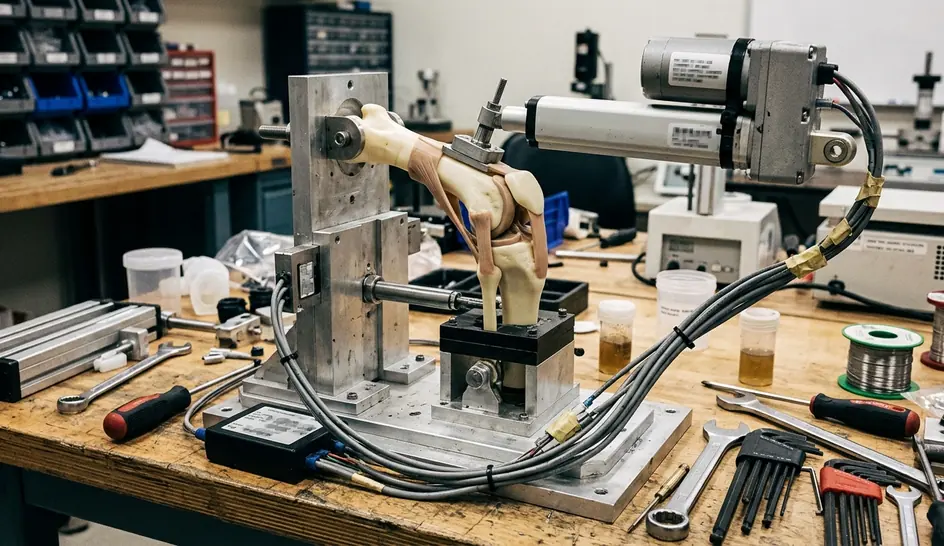
Normal movement creates manageable wear when cartilage retains water and synovial fluid maintains suitable viscosity. Problems develop as breakdown begins to outpace repair. The surface loses some resilience, lubrication becomes less efficient and each impact concentrates more force on a matrix that already has fewer resources.
The Midlife Fluid Shift
In medium-to-large breeds, synovial fluid viscosity naturally begins to decline between four and five years of age. That change can occur while the dog still runs, plays and completes obedience training with enthusiasm. A clean sit or fast recall says little about microscopic cartilage condition.
Body movement also explains why complete inactivity offers a poor maintenance model. Compression and release circulate synovial fluid through cartilage. Joint-friendly activity preserves that pumping action without adding the abrupt impact associated with repeated high drops or uncontrolled pivots.
How Glucosamine and Chondroitin Reach the Matrix
Glucosamine acts as a precursor for glycosaminoglycans, compounds used to build and maintain cartilage. Chondroitin supports a related function: it draws water and nutrients into the cartilage matrix, helping the tissue resist compression and recover its shape after loading.
The pairing matters. Early formulation work emphasized isolated glucosamine hydrochloride because it cost less to produce. Tissue assays later showed that the isolated form did not create an adequate osmotic draw for cartilage shock absorption. Formulators consequently moved toward glucosamine sulfate combined with low-molecular-weight chondroitin.
Particle Size Governs Access
Chondroitin sulfate generally must be reduced below a molecular weight of more or less 16,000 Daltons to cross the canine intestinal barrier effectively. A label that lists “chondroitin” without identifying its form or molecular-weight characteristics leaves an important absorption question unanswered.
Oral bioavailability still varies with formulation and digestion. That qualifier matters when interpreting a dog’s response: an adequate label dose does not establish how much compound ultimately reaches joint tissue. Daily administration provides a more useful test than sporadic use because therapeutic accumulation of glycosaminoglycans in the joint capsule requires 28 to 42 uninterrupted days.
Absorption Sets Pace
Judge structural support over weeks of documented administration. A change after one or two chews is unlikely to represent meaningful accumulation within cartilage.
I prefer a simple completion record beside the food container: date, full dose given and any missed administration. That log separates a formulation problem from an adherence problem before the product gets replaced.
Matching the Start Date to the Dog’s Workload
Breed size establishes one timing marker; workload adds another. Large dogs place more absolute force through each joint, while agility, field work and repeated vehicle exits increase the frequency of compression. Working breeds engaged in agility or field trials may begin intervention protocols as early as 18 months.
A companion dog with moderate daily walks follows a steadier path. For that dog, the practical goal is to establish a routine before midlife changes in synovial fluid become pronounced. Puppy care records can help here because growth pattern, adult weight and activity history are easier to review at scheduled milestones than after a mobility change.
Build the Loading Phase
- Set a maintenance target: calculate the daily amount from body weight and the active-ingredient panel.
- Load the tissues: standard protocols double the maintenance dose during the first four to six weeks.
- Record every dose: missed days interrupt the consistency required for tissue accumulation.
- Return to maintenance: reduce to the calculated ongoing dose after the loading period.
- Track function: note stair rhythm, recovery after exercise and willingness to enter or exit a vehicle.
The loading phase manages a biological delay; it does not promise immediate comfort. Owners often notice day-to-day enthusiasm before they can judge durable mobility, particularly when reinforcement, excitement or a favorite walking route temporarily masks stiffness.
Preventative loading also has a defined boundary. It cannot rebuild cartilage in joints with grade 3 or higher osteoarthritis, where the structural matrix has degraded beyond the point of using nutritional precursors. At that stage, joint supplements may occupy one part of a broader health & wellness plan, but they cannot restore the missing architecture.
Reading Past Flavorings and Proprietary Blends
The front of a supplement package sells a format: soft chew, liver flavor, senior formula. The ingredient panel reveals whether the product can deliver a measurable amount of glucosamine and chondroitin.

Start with the active compounds and their milligram counts per chew, tablet or scoop. Proprietary blends obscure that calculation because they provide a combined blend weight without stating how much of each compound the dog receives. A long ingredient list cannot compensate for missing quantities.
A 50-Pound Dose Calculation
Therapeutic glucosamine dosing typically falls between 15 and 20 milligrams per pound of body weight each day. For a 50-pound dog, multiply 50 by each end of that range:
- 50 × 15 milligrams = 750 milligrams daily
- 50 × 20 milligrams = 1,000 milligrams daily
The dog’s target therefore falls between 750 and 1,000 milligrams of glucosamine per day. Next, divide that target by the label’s stated amount per unit. During a loading phase, double the resulting maintenance amount for the specified four-to-six-week period rather than guessing from the chew’s physical size.
Count Active Milligrams
Maltodextrin, brewer’s yeast and other binders or palatants can account for a significant share of a chew’s mass. Weigh the glucosamine and chondroitin values, not the apparent size of the treat.
Chondroitin deserves a separate line in the review. Confirm its milligram amount, form and any available molecular-weight information. This five-minute label audit often tells more than flavor claims, breed illustrations or broad phrases such as “advanced mobility support.”
Synovial Fluid Completes the Delivery Route
Articular cartilage is entirely avascular: it contains no blood vessels. Nutrients absorbed from an oral supplement cannot travel directly through a local blood supply into the cartilage matrix. They must enter the surrounding synovial fluid and diffuse inward.
This fluid bath connects supplementation with movement. As the joint bears weight, cartilage compresses and releases fluid. When the load lifts, the matrix draws nutrient-rich synovial fluid back into its structure. A controlled 20-to-30-minute walk supplies the repeated mechanical compression and release needed to pump that fluid into avascular cartilage.
Movement Drives Diffusion
That mechanism gives leash manners and joint care a practical point of contact. A measured walk with steady pacing creates a more controlled loading pattern than repeated lunges, abrupt stops or high-impact jumps. The supplement supplies raw materials; the moving joint helps distribute them through the fluid surrounding the cartilage.
Delivery remains remarkably slow even under favorable conditions: nutrients diffuse from synovial fluid into the deepest layers of canine articular cartilage at a rate of mere millimeters per hour.