Why Predictable Rewards Produce Reliable Obedience
True canine compliance grows from predictable environmental reinforcement. Physical subjugation disrupts that process by adding threat, defensive behavior, and uncertainty to what should be a clear learning sequence.
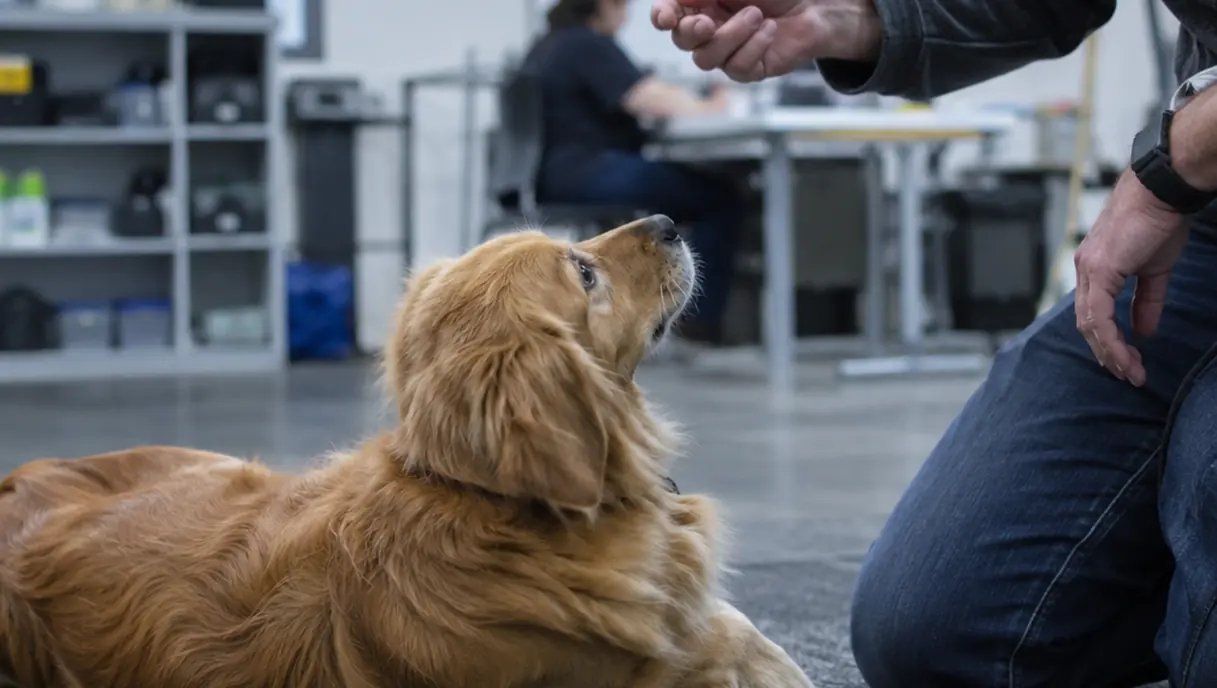
A dog repeats behaviors that reliably produce valuable outcomes. Sit opens the door. Eye contact starts the walk. Returning when called earns boiled chicken or a quick game of tug. With repetition, each cue becomes information about the next available consequence. The dog does not need to recognize a human as a higher-ranking pack member; it needs to understand which choice pays.
This makes obedience training a problem of behavioral economics rather than a battle of wills. The trainer manages three variables: the value of the reward, the effort required to earn it, and the consistency of delivery. A vague marker or delayed reward weakens the connection between action and outcome. A crisp marker followed promptly by something the dog values makes the successful choice easier to identify and repeat.
Track the Choice
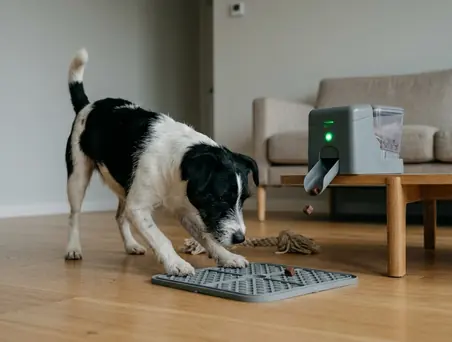
I use a compact training record built around completion rate, cue reliability, and relapse after distraction. These measures reveal more than labels such as stubborn or dominant. If recall collapses when a squirrel appears, the training plan needs a better reinforcement history around wildlife. The dog has supplied usable data.
Reward What Repeats
Choose the reinforcer from the dog’s perspective. Dry food may work in the kitchen, while boiled chicken, access to the yard, or a tug toy may be necessary near competing distractions.
How Captive Wolves Shaped the Alpha-Roll Myth
The alpha-roll concept traces back to mid-20th-century observations of unrelated wolves housed together in restrictive captive enclosures. That arrangement intensified competition and removed the dispersal, territory, and family relationships that organize life in the wild. Researchers saw conflict under artificial pressure and treated it as a general social blueprint.
Modern ethology describes wild wolf packs primarily as family units. Parents guide offspring, juveniles mature, and some eventually leave. Daily pack life cannot be reduced to a continuous contest for rank. This change in interpretation matters because the alpha roll borrowed its rationale from the earlier captive-wolf model.
The consensus among veterinary behaviorists also warns against using dominance theory as a broad explanation for companion-animal behavior. Resource guarding, leash reactivity, jumping, and poor recall each have more precise functional explanations.
Dogs Follow Different Rules
Domestic dogs, Canis lupus familiaris, also carry the effects of thousands of years of selective breeding for cooperation with people. They monitor human movement, gestures, access, and routines with unusual sensitivity. Mapping captive-enclosure wolf dynamics directly onto the bond between a person and a domestic dog ignores that breeding history.
A puppy rushing through a doorway may have a strong reinforcement history for reaching the yard. Framing the same behavior as a rank challenge sends the training plan in the wrong direction. Doorway access can instead become the reward for pausing, making eye contact, or holding a brief stay.
What Forced Restraint Does to a Dog’s Nervous System
Forcing a dog onto its back can activate the sympathetic nervous system. Heart rate and muscle tension rise, stress-related salivary cortisol can remain elevated after the correction ends, and the dog may freeze. The salivary cortisol persistence window following forced supine restraint matters because the visible confrontation can finish before the dog’s body has returned to baseline.
That quiet body is easy to misread. During a freeze response, movement stops because the nervous system has selected immobility as a survival strategy. The dog has learned that human hands predict restraint; it has not necessarily learned sit, down, stay, or recall.
Stillness Is Weak Evidence
Learned helplessness further complicates the picture. When attempts to escape repeatedly fail, a dog may stop offering behavior altogether. This suppresses useful information: the trainer sees less growling or struggling while underlying fear remains. Later, the dog may avoid touch, move away when approached, or react sooner because subtle warning signals previously had no effect.
The physiological response described here concerns forced restraint used as a correction. It should not be generalized to routine harnessing, cooperative veterinary handling, or gentle physical support that the dog has learned to accept.
Emergency Hands Only
Physical intervention has a narrow safety role when immediate danger leaves no training window, such as stopping a dog from entering traffic. It does not build foundational command retention. Once everyone is safe, structured behavior modification should resume through distance, management, and reinforcement.
Building Sit, Stay, and Recall Through Voluntary Action
Foundational commands become more durable when the dog actively selects the target behavior. Capturing records a complete behavior the dog already offers. Shaping rewards successive approximations toward a finished behavior. Both methods preserve choice while giving the trainer precise control over consequences.
Capture a Clean Sit
Older training protocols often molded a sit by pressing on the dog’s hindquarters. Many dogs responded by posting their legs or pushing back against the pressure. Capturing removes that opposition reflex from the lesson.
- Stand quietly with a treat prepared and keep your hands off the dog’s back.
- Wait for the dog to place its hindquarters on the floor naturally.
- Mark the instant the sit completes with a clicker or a consistent verbal marker.
- Deliver the reward where the dog can remain balanced in position.
- After unprompted sits begin repeating, add the verbal cue just before the movement.
The sequence creates a useful neural and behavioral chain: cue, voluntary movement, marker, reward. Because the dog generated the movement, the position carries less conflict and becomes easier to reproduce without a hand prompt.
Shape Duration and Distance
A stay contains separate criteria: position, duration, handler movement, and environmental distraction. Raise one criterion at a time. Reward a brief stationary moment before stepping away. Build handler movement separately before asking the dog to resist a bouncing toy or an opening door.
Recall follows the same logic. Start where returning is easy, then pay generously. A long line can protect safety while remaining loose enough for the dog to make the choice. Food, play, sniffing access, and release back to exploration all function as environmental rewards.
- Food supports rapid repetitions and precise placement.
- Play can raise energy for recall and engagement exercises.
- Access turns doors, greetings, sniffing, and movement into practical rewards.
- Release teaches the dog that returning does not always end the enjoyable activity.
A useful session ends while responses remain fluent. Record whether the cue worked on the first presentation, which distractions caused latency, and whether performance recovered after an error. Those observations guide the next session more accurately than escalating physical pressure.
The Moment a Defensive Dog Chooses to Settle
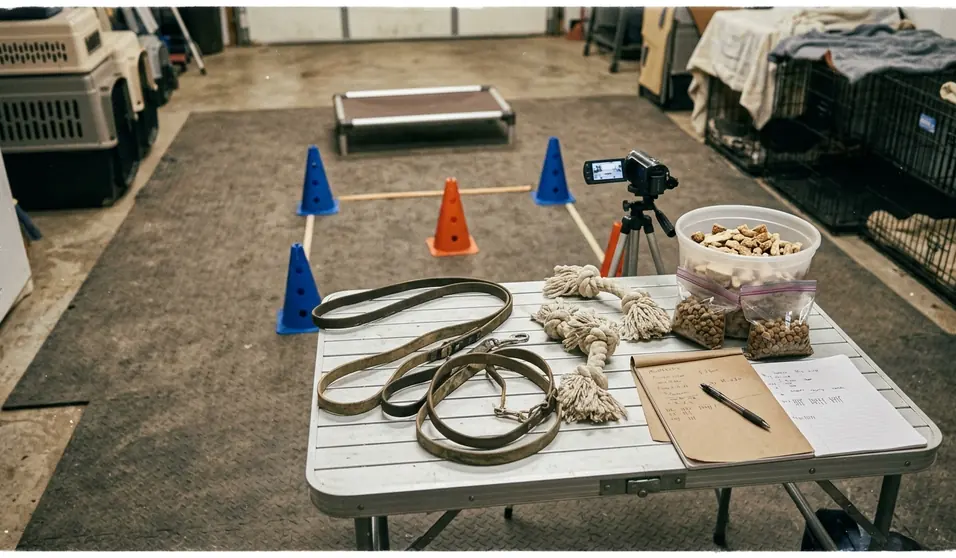
Morning light reaches across a quiet living-room mat. A trainer sits sideways to a reactive rescue dog, keeping her shoulders soft and her gaze indirect. A long line lies slack on the floor as a safety measure. The clicker rests in one hand; a piece of boiled chicken waits in the other.
The dog stands with weight shifted back, watching every movement. The trainer does nothing to arrange his body. She waits. His breathing slows, one hip loosens, and his elbows begin to fold. The instant his chest touches the mat, the click sounds. Chicken arrives low between his paws.
On the next repetition, he reaches the answer sooner. No hand presses between his shoulders. No one turns him over. He stretches forward into a relaxed down, exhales, and rests his chin across his paws while the sun warms the edge of the mat.