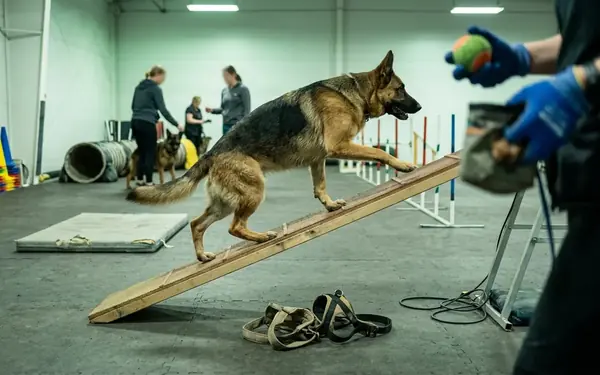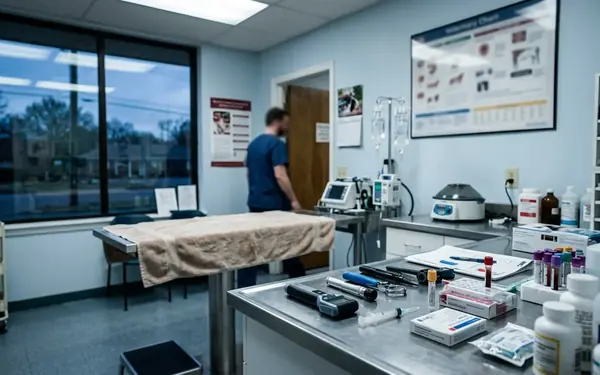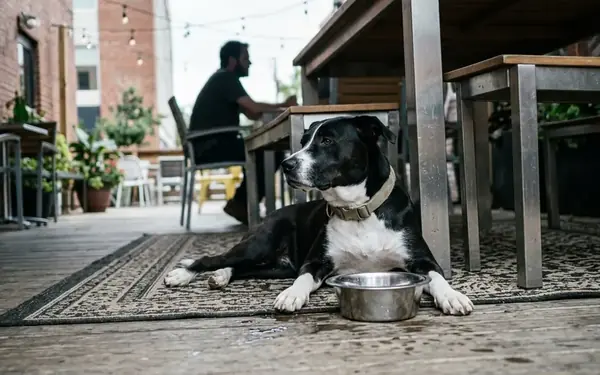
Puppy socialization is not a race to meet every person, dog, truck, floor surface, and coffee grinder before adolescence. I treat it more like controlled sampling: brief exposures, clean exits, and a record of how the puppy recovered afterward.
The goal is a calm dog who can notice the world without feeling hunted by it.
What's Inside
- Understanding the Critical Socialization Window
- Criteria for Selection and Safety Protocols
- The Puppy Socialization Checklist
- Recognizing and Managing Overstimulation
- Building Lifelong Confidence
Understanding the Critical Socialization Window
The primary puppy socialization window typically runs from 3 to 14 weeks of age. That range matters because the puppy brain is sorting what belongs in ordinary life and what deserves caution. During this neurological phase, rapid synaptic pruning helps shape future responses to novelty, including fear responses that can solidify when the puppy has too little safe experience or one experience that is too intense.
This is why I do not define socialization as “meeting things.” I define it as forming positive predictions.
A puppy who hears a delivery truck, eats a few soft treats, and then gets carried back inside has collected useful information. A puppy who gets cornered by three strangers while the same truck hisses at the curb may collect the opposite lesson, even if everyone involved meant well.
Critical Insight: Exposure is neutral. Positive exposure is instructional. The difference is the puppy’s body language, distance from the trigger, and ability to recover.
The consequences of missing this window usually do not look like a blank training slate. They often look like avoidance, alarm barking, freezing, frantic leash pulling, or defensive reactivity when the dog meets ordinary stimuli later. I see this most often around categories the puppy never had a chance to process calmly: men in hats, children running, garbage trucks, metal stairs, slippery floors, or dogs with intense greeting styles.
One uncontrolled dog park encounter can leave a puppy developing a lifelong fear of large dogs. That is not because puppies are fragile in a general sense. It is because the nervous system is efficient. It tags danger quickly when the event feels inescapable.
So the checklist below is not a scavenger hunt. It is a framework for building confidence without flooding the dog.
Criteria for Selection and Safety Protocols
I selected these checklist items because they show up repeatedly in urban and suburban homes: hard flooring, appliance noise, traffic patterns, covered faces, uniforms, and awkward surfaces. Urban puppies need very different preparation than rural puppies. A city puppy may need calm exposure to traffic noise and metal grates; a rural puppy may need distance-based exposure to livestock, tractors, and heavy machinery.
The selection also follows the current direction of veterinary behavioral guidelines on socialization, which increasingly favor controlled, positive exposure over strict isolation until the final puppy vaccine series is complete. The practical question is not whether puppies need the world. They do. The question is how to let them study it without making poor disease-risk choices.
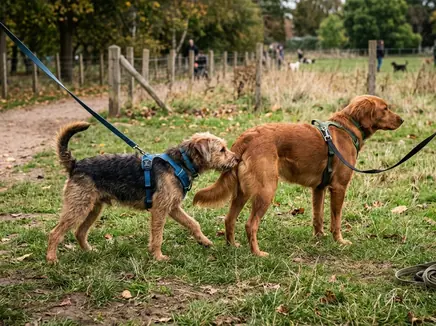
Risk Factor: Parvovirus can survive in shaded soil for many months, and in some conditions up to a year. Until your veterinarian clears your puppy for broader ground access, avoid high-traffic dog areas, shared potty zones, pet store floors, and dog parks.
For early outings, I prefer methods that reduce contact with contaminated ground: a front-carrying sling, a secure carrier, or a pet stroller with a mesh enclosure. These let the puppy watch joggers, bikes, buses, children, and umbrellas while staying off risky surfaces.
There is a limitation. Stroller socialization works well for visual and auditory exposure, but it restricts tactile learning. You still need safe surface work indoors or in private areas.
Good low-risk options include:
- Carrying your puppy to sit outside a quiet school at dismissal distance, not at the doorway.
- Using a stroller near a grocery store entrance while staying away from dog traffic.
- Visiting the private yard of a healthy, vaccinated dog whose behavior you know.
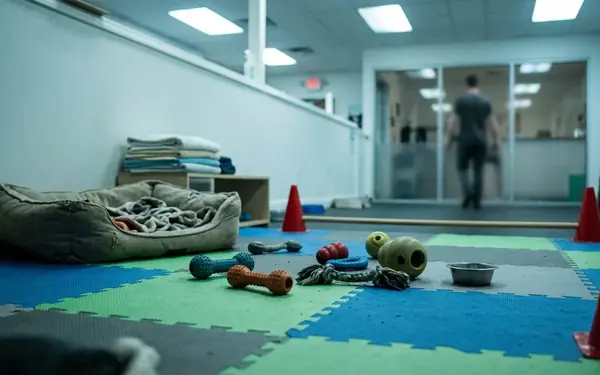
- Setting up texture stations at home with cardboard, towels, baking sheets, rubber mats, and clean plastic lids.
- Inviting one calm visitor at a time rather than hosting a puppy-passing party.
Recommendation: Keep early exposure sessions short enough that the puppy can still eat, orient back to you, and choose to investigate. If food suddenly becomes uninteresting, the session may already be too hard.
The Puppy Socialization Checklist
Use this checklist in small loops. For most novel stimuli, I like something like 3 to 5 minute exposure sessions, then a break. That duration sounds almost too short until you watch a young puppy process a new surface, new sound, and new person all at once.
Do not stack difficulty for convenience. A puppy meeting a bearded neighbor while standing on a metal grate beside traffic is not getting three clean lessons. The puppy is getting one messy event.
We initially included dog parks in the checklist, then removed them after consultation with behavioral specialists. Unpredictable adult dog interactions create too much variance for a foundation plan. A well-run puppy class with vaccination requirements and managed pairings is a different category.
1. Novel Surfaces and Textures
Surface confidence is one of the least glamorous parts of puppy raising, and it pays off constantly. Dogs who trust their feet handle vet scales, grooming tables, apartment stairs, storm drains, elevators, and wet sidewalks with less argument.
In a single week, introduce 4 to 6 distinct textures, more or less. Keep the setup simple: metal grates, wet grass, linoleum, gravel, rubber matting, and cardboard will cover a lot of useful territory. If your puppy hesitates, resist the urge to pull the leash forward. Toss a treat near the edge of the surface, then another slightly closer. Let the puppy’s feet make the decision.
- Grass: dry first, then damp or wet.
- Gravel: start with shallow gravel that does not shift dramatically.
- Metal grates: begin beside the grate, then reward one paw, two paws, and a calm step across.
- Linoleum or tile: add traction with a mat nearby so the puppy has an exit path.
My preferred marker for success is not speed. It is a loose body, normal breathing, and a puppy who can turn back toward you after investigating.
2. Household Sounds and Appliances
Appliance work should begin below the puppy’s startle point. That may mean the vacuum sits silent in the room for a day before it ever turns on. Then it may run in another room while the puppy works on a chew. The blender may start as a visual object on the counter before it becomes a sound.
Dropping objects deserves special care. A puppy who learns that every clang predicts laughter, chaos, or pressure may become jumpy around kitchens and workshops. Instead, pair small sounds with predictable good outcomes: a spoon placed into a sink, treat; a plastic cup dropped on carpet, treat; a pan moved gently on the stove, treat.
Owners often overestimate how long a puppy needs to “get used to it.” In practice, a few calm repetitions beat one long session where the puppy spends half the time bracing.
3. Diverse People and Apparel
Puppies do not generalize “people” as neatly as humans assume. A toddler, a tall teenager in a hoodie, a person using a cane, a cyclist in sunglasses, and a delivery worker in a reflective vest may register as separate categories.
Build the category kindly.
- Hats: baseball caps, winter hats, wide-brimmed hats.
- Face changes: sunglasses, masks, beards, scarves.
- Movement patterns: slow walkers, joggers at a distance, people carrying boxes.
- Ages: supervised children, adults, older adults.
- Uniforms: delivery clothing, medical scrubs, high-visibility vests.
Ask people to ignore the puppy at first. That single instruction prevents most over-greeting. If the puppy chooses to approach with loose posture, the person can toss a treat to the ground rather than reaching over the head.
Recognizing and Managing Overstimulation
Overstimulation usually whispers before it shouts. The puppy may stop taking treats, scan rapidly, yawn when not tired, lip lick several times, tuck the tail tightly, lower the body, scratch suddenly, or turn away from the trigger. Those signs matter more to me than whether the puppy is still technically “behaving.”
The threshold concept is the hinge of good socialization. Below threshold, the puppy can notice, eat, move, and learn. Over threshold, the puppy shifts into survival behavior. Pushing at that point does not build resilience; it rehearses panic, avoidance, or defensive noise.
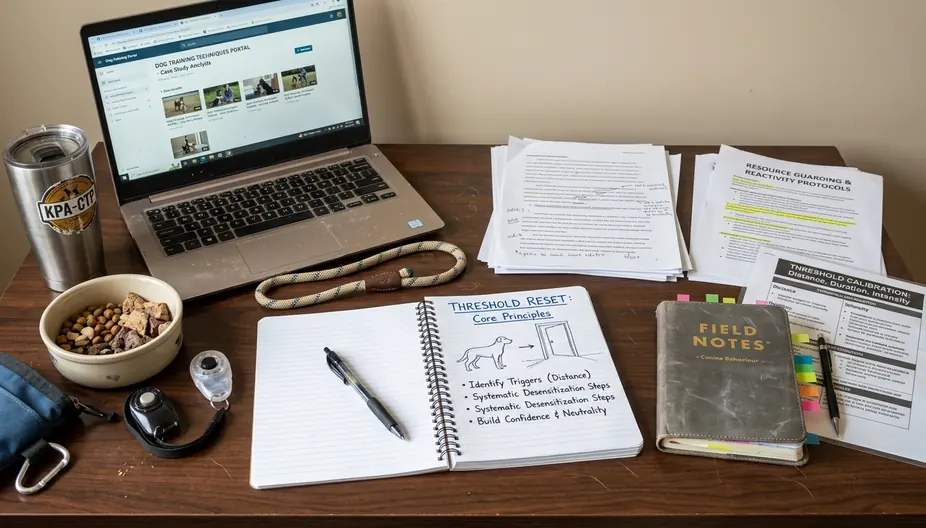
Use a retreat-and-reset protocol when the puppy shows early stress:
- Stop moving toward the trigger.
- Turn your body sideways to reduce social pressure on the puppy.
- Retreat 10 to 15 feet away from the trigger, give or take, or farther if the puppy still cannot eat.
- Offer a small treat scatter on the ground to encourage sniffing and decompression.
- Watch for recovery: softer eyes, normal tail carriage, food interest, and the ability to look back at you.
- End the session or re-approach at an easier distance. Do not repeat the same hard setup immediately.
Recommendation: If you need to choose between one more repetition and a clean exit, choose the clean exit. Puppies remember endings.
This is where owners often worry they are “letting the puppy win.” That framing causes trouble. The puppy is not negotiating a contract. The puppy is reporting nervous system capacity in real time.
Your job is to keep the lesson learnable.
Building Lifelong Confidence
The checklist gives you structure, not a finish line. Socialization continues after the primary window closes, and many dogs move through secondary juvenile fear periods between 6 and 14 months of age, somewhere around. A dog who handled garbage trucks at 12 weeks may suddenly pause at them again at 9 months. That does not mean the foundation failed. It means the dog needs maintenance.
After the early window, maintain a schedule of 1 to 2 positive novel exposures per week. Keep them modest: a new walking route, a different park bench, a calm visit near a playground fence, a new floor surface at a training facility, or a quiet observation session outside a hardware store.
Patience is not soft training. It is precise training. You are measuring whether your puppy can recover, reorient, eat, investigate, and trust your guidance when the world changes.
That trust becomes the real outcome. Not a puppy who has seen everything, but a dog who believes new things can be handled with you nearby.