Structured outdoor exercise is not a luxury for dogs—it is a behavioral requirement. A dog deprived of varied movement and novel sensory input tends to develop the symptoms owners later describe as boredom: destructive chewing, excessive vocalization, and a low threshold for anxiety. Memphis, with its sharp topographical contrasts, offers an unusually rich environment for addressing those needs.
The Role of Environmental Enrichment in Canine Behavior
Cognitive stimulation in dogs depends heavily on what the nose encounters, not merely how far the legs travel. Novel environments—unfamiliar scents, changing terrain underfoot, shifting sightlines, force a dog to process information rather than repeat a route by rote. That processing is the work that tires a dog out in a way a treadmill never will.
To understand what Memphis actually offers, it helps to map the city by sensory complexity rather than acreage alone. Shelby County is not flat. Elevation shifts from roughly 200-foot riverfront lowlands to nearly 400-foot bluffs, and that gradient produces meaningfully different soundscapes and scent profiles across short distances.
The Mississippi River basin contributes its own olfactory signature. Wild indigo and river oats grow along the lowland corridors, and a dog working those scent layers is engaged in real cognitive labor. For an anxious rescue or an under-stimulated working breed, that variety matters more than a wide-open field.
Criteria for Selection: Evaluating Memphis Green Spaces
The locations below were not chosen by popularity. Each was assessed against a consistent set of safety and terrain standards, applied uniformly so that the comparison holds up.
The original draft of this evaluation included several neighborhood pocket parks. They were dropped. Most lacked double-gated entry systems and a sufficient buffer between the play area and the road, and without those two features a small park introduces more risk than it resolves.
Safety thresholds
Two measurable conditions governed inclusion:
- A minimum 150-foot buffer zone separating the off-leash area from any high-traffic road.
- Perimeter fencing standing at least 5 feet tall, constructed from welded wire or chain-link with clear sightlines across the enclosure.
Terrain suitability
Beyond fencing, the surface a dog runs on determines whether a visit is safe in July. Site visits prioritized paw-friendly ground, the density of natural canopy for shade, and reliable access to hydration. A park that meets every fencing requirement but bakes in full sun fails a different test entirely.
Based on participant feedback, shaded, surface-appropriate routes draw more sustained use through the summer months than larger but fully exposed spaces.
Top 5 Dog-Friendly Parks and Trails in Memphis
Site visits were conducted during peak summer hours, specifically to measure asphalt temperatures and assess canopy cover along paved routes. The rankings reflect what holds up under Memphis heat, not just what photographs well in October.
1. Shelby Farms Park (The Outback Off-Leash Area)
The Outback is the anchor of off-leash recreation in the region, with over 100 acres of terrain and water features suitable for swimming. The trail difficulty varies enough that a conditioned dog can build endurance while a recovering or older dog can stay on flatter, shorter loops. For owners who want their dog to actually swim rather than wade, this is the strongest option in the county. Details on access and hours are available through the Shelby Farms Park Outback Off-Leash Dog Park.
2. Overton Park (Overton Bark)
Overton Bark occupies somewhere around a 1.3-acre enclosed footprint inside an urban setting, with separate areas partitioning large and small breeds. The enclosure and the breed separation make it well suited to owners who want predictability over expanse. Its community atmosphere is its defining feature—regulars know each other's dogs, which tends to produce calmer group dynamics than a transient crowd.
3. Wolf River Greenway
The Greenway trades open play for structure. Its paved, shaded pathways are built for on-leash endurance walking, and the canopy cover keeps the surface tolerable later in the day than most exposed trails. For a dog whose owner wants a measured, repeatable workout rather than chaotic play, this is the pick.
4. Meeman-Shelby Forest State Park
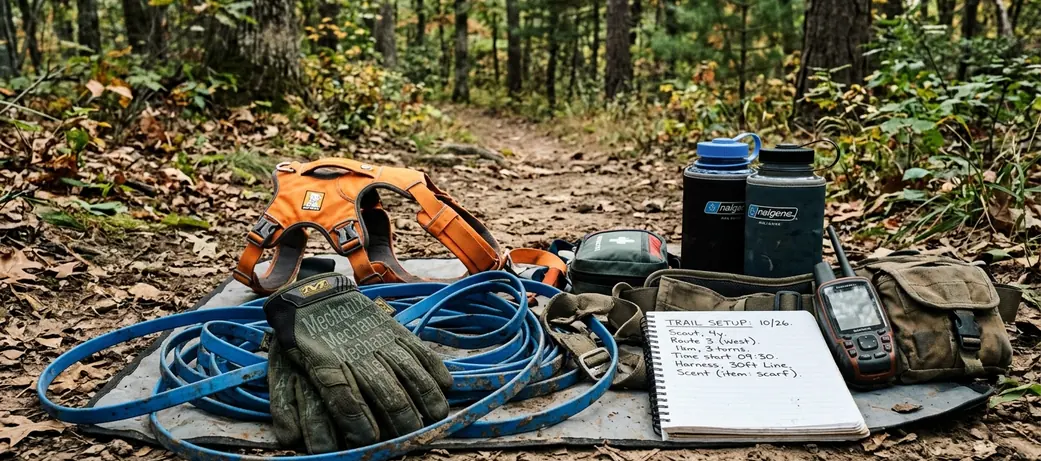
This is the rugged option. Expect loops of something like 3 miles and exposed root systems—terrain that demands a sure-footed, well-conditioned dog and an attentive handler. It is not a beginner environment, but it delivers the most genuine sensory and physical challenge on this list.
5. Shelby Farms Greenline
The Greenline rounds out the list as a long, accessible paved corridor connecting neighborhoods. It rewards structured walking, though its exposure carries a specific late-afternoon hazard addressed in the preparation section below.
Scope and Limitations of Public Dog Parks
Off-leash environments carry inherent, unavoidable risk. The behavior of an unfamiliar dog cannot be predicted, and no amount of fencing changes that. Owners should treat every visit as an exercise in active supervision rather than passive relaxation.
Risk Factor: Off-leash areas are strictly contraindicated for dogs currently undergoing behavioral modification for resource guarding. Communal water bowls and stray toys frequently trigger threshold stacking, where multiple minor stressors compound into a reactive episode. A dog with a history of reactivity belongs on structured on-leash trails, not in a shared enclosure.
Terrain in Memphis is seasonal, and the swing is dramatic. Cross-referencing local weather patterns with veterinary advisories on waterborne pathogens reveals a clear pattern: the high-density clay soil across West Tennessee retains moisture and creates deep mud pockets, and standing water can persist for 48 to 72 hours, give or take, after heavy spring downpours.
Trail suitability therefore shifts drastically between the dry autumn months and the flood-prone spring season in the Mississippi River basin. A loop that is firm and ideal in October may be impassable—and a vector for pathogens, in April.
One qualifier worth stating plainly: these assessments reflect conditions documented during specific site visits and seasonal cross-referencing. Ground conditions change, and an owner's own check on the day of a visit remains the final word.
Preparation Guidelines for Memphis Trails
Preparation begins before the leash comes off the hook. A dog entering a shared environment should be current on vaccinations and on a consistent parasite-prevention schedule—this protects both the individual dog and every other dog at the park.
Essential gear
- A sturdy, well-fitted harness. The material matters in summer; evaluating styles for heat retention showed that breathable construction reduces the risk of thermal stress over long walks.
- A non-retractable leash for any on-leash trail, which gives the handler genuine control near other dogs and trail edges.
- A portable water bowl and a dedicated water supply.
Recommendation: Plan for roughly 8 to 10 ounces of water per hour of moderate activity. In Tennessee summer humidity, under-hydration arrives faster than most owners expect.
The most preventable injury on local trails is the paw pad burn. Owners routinely underestimate asphalt heat retention in the late afternoon. Asphalt can reach something like 120 degrees Fahrenheit when the ambient air is 85, more or less—hot enough to scald pads on the Greenline within minutes. The simplest test still works: press the back of your hand to the surface for seven seconds. If you cannot hold it there, neither can your dog.
Critical Insight: Read body language continuously and treat it as the primary safety instrument. Excessive panting, a slowing pace, or a reluctance to continue signals overexertion well before heatstroke sets in. End the session early rather than push for distance. In Memphis heat, the goal is a tired dog, not an overheated one.