What's Inside
- The Reward Math Behind Weight Gain in Training Dogs
- Why Water-Rich Foods Keep a Dog Working Longer
- Seven Fridge Foods Ranked by Cost, Speed, and Mess
- Leftovers and Labels That Stay Out of the Pouch
- Cube Size, Drying, and the Nightly Pouch Routine
The Reward Math Behind Weight Gain in Training Dogs
How can a handler deliver hundreds of rewards a day during intensive behavior modification without the dog gaining weight? This question comes up in nearly every desensitization case, and it deserves a straight answer, because the arithmetic gets ugly fast.
Operant conditioning runs on frequency. Active shaping sessions need a delivery rate of roughly 4 to 6 treats per minute to keep a novice dog from losing the behavior to extinction. A reactive dog working through a counterconditioning protocol may need 120 to 150 reward deliveries in a single session. The dog's metabolism has no interest in any of that. Its resting energy requirement stays the same whether it learned something today or not.
Now look at what most handlers carry. Commercial soft training chews typically pack 4 to 5 kilocalories per piece. Run 150 repetitions through a 45-minute block and you have added up to 750 extra kilocalories, which can approach or exceed a small dog's entire daily intake. Many of these chews also hide fats, molasses, and palatability enhancers behind a "training size" label.
Veterinary nutrition standards cap unfortified supplemental treats at 10% of total daily calories, partly to prevent trace mineral dilution in the main diet. Soft chews blow through that ceiling within minutes.
The practical fix trainers settle on is swapping dense biscuit bases for water-heavy produce, so the dog's regular meals keep their full volume and nutrient balance.
Why Water-Rich Foods Keep a Dog Working Longer
Picture a dog forty minutes into a session on dry kibble rewards. Its responses slow. It sniffs the floor between cues. Handlers often read this as fatigue or stubbornness, yet the stomach is frequently the real culprit.
Dry extruded kibble absorbs gastric fluids and expands over 20 to 35 minutes. That swelling triggers stretch receptors in the stomach wall, and the dog starts feeling full mid-session. Pre-hydrated produce arrives already holding its water, so the volume signal climbs more gently and food drive stays steadier through a forty-five-minute block.
The chewing pause problem
Texture matters as much as calories. A firm biscuit can create a 4-to-6-second chewing pause, and during heelwork that pause breaks visual focus on the handler. Small, crisp, or soft refrigerated items need very little mastication. The dog swallows, orients back, and is ready for the next cue.
This becomes critical during desensitization work that demands high-frequency feeding near a trigger. Hydrated whole foods also spare the dog the gastrointestinal sluggishness that piles up when a session leans heavily on dry kibble.
Know Your Dog's Ceiling
Produce has real limits. Dogs with high environmental anxiety or strong predatory drift outside the home will frequently spit out raw vegetables. Reserve low-value plant items for low-arousal indoor mechanics, and expect to change the menu the moment you step outdoors.
Seven Fridge Foods Ranked by Cost, Speed, and Mess
Each option below is judged on three working metrics: caloric cost per small cube, how quickly the dog swallows it, and how slimy it gets after sitting in a pouch against your hip for half an hour.
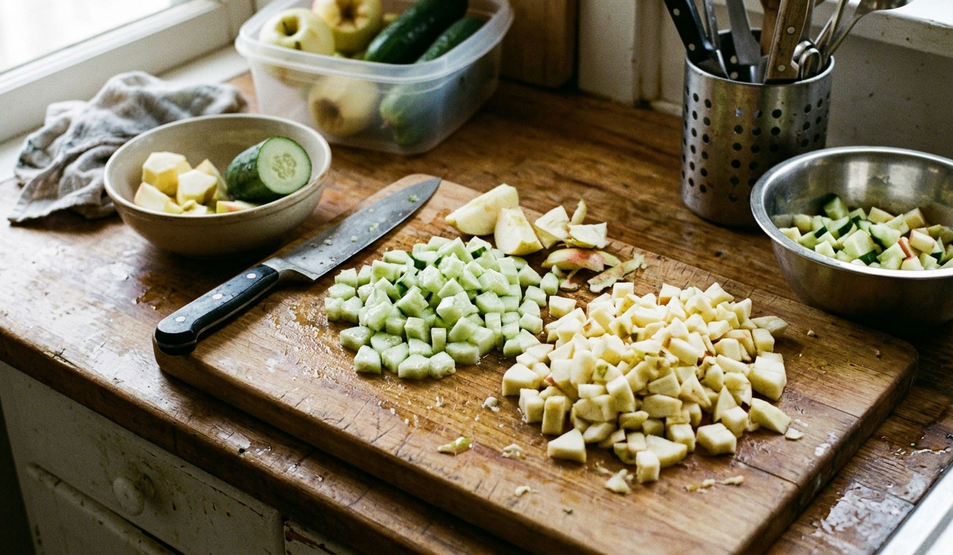
- Cucumber slices. Peeled cucumber runs roughly 92% to 96% water by weight and delivers less than half a kilocalorie per quarter-inch cube. Peel and deseed it for sensitive stomachs. The crunch satisfies dogs that like something to work their jaws on, though it weeps moisture quickly in a warm pouch.
- Green beans, steamed or raw. High in fiber and easy to snap into pea-sized segments by hand for rapid delivery. Blanched beans hold their shape better than most produce and absorb scent well, a property that matters later.
- Baby carrots, finely diced. Raw carrots must be cut into 4-to-5-millimeter cubes so the dog can swallow them in under 2 seconds without breaking stride. Larger chunks invite long chewing pauses during rapid-fire heelwork.
- Seedless watermelon. Similar water content to cucumber and the same sub-half-kilocalorie cost per quarter-inch cube. Dogs swallow it almost instantly. It is also the messiest item on this list, so carry it in a separate container.
- Skinless roasted turkey breast. At about 1 kilocalorie per pea-sized cube, turkey costs more than any vegetable here, but it supplies the amino acid profile and the motivation needed for high-distraction recalls. Plain, unseasoned, and home-roasted only.
- Zucchini. Mild, watery, and soft enough to swallow fast. Treat it like cucumber: low cost, moderate slime, best for indoor sessions.
- Cored apple. Remove all seeds and the core. Firmer than melon, so dice it small. Some dogs value its sweetness more than any green vegetable.
The sizing lesson came from outdoor agility classes, where early trials with grated raw carrot strips sent dogs nosing through the grass for dropped shreds instead of watching their handlers. Uniform 5-millimeter cubes that hold together in the hand solved it.
Where plant matter stops working
Draw a firm line here. For indoor shaping mechanics, raw cucumber or green beans suffice for most dogs. For outdoor threshold counterconditioning, with a reactive dog watching another dog across a parking lot, plant matter fails. Poultry-dusted cubes become mandatory, because the reward has to compete with the dog's own emotional state.
Leftovers and Labels That Stay Out of the Pouch
Some refrigerator staples cause serious organ damage, and a few can kill. Keep these out of the pouch entirely:
- Grapes and raisins, linked to kidney damage in dogs.
- Onions, garlic, and chives. These allium species cause oxidative damage to red blood cells, and clinical hemolytic anemia often does not appear until 3 to 5 days after the dog eats them. By then, nobody remembers the leftover stir-fry.
- Anything sweetened with xylitol, often labeled birch sugar in reduced-calorie peanut butter and yogurt. It triggers a rapid insulin spike within 15 to 30 minutes, leading to acute hypoglycemia.
- High-fat cheeses and flavored yogurts, which can bring on osmotic diarrhea during an already stressful learning phase.
Cross-contamination is the sneaky one. Never pull meat or vegetables from mixed family leftovers cooked in allium-based broths or heavy oils, since unseen pan drippings carry the same risks as the raw ingredient. The FDA guidelines on household foods potentially dangerous to pets make a useful printout for the fridge door.
Read Every Peanut Butter Label
"Natural" and "reduced sugar" tell you nothing about xylitol. Check the ingredient list for xylitol or birch sugar every time you buy a new jar, even a familiar brand.
Cube Size, Drying, and the Nightly Pouch Routine
Size the reward to the muzzle. A small terrier gets pea-sized pieces; a large retriever can take something closer to a pencil eraser. Staying inside that pea-to-eraser range maximizes repetition speed and keeps choking risk low.
Wet cubes turn into a slippery mash by mid-session, and the fix starts the night before. Spread diced produce on triple-layered paper towels in an uncovered refrigerator container for 8 to 12 hours to draw out surface moisture. Before you leave, dust the cubes with a pinch of pulverized freeze-dried liver. The powder boosts aroma and keeps your fingers dry enough to deliver cleanly.
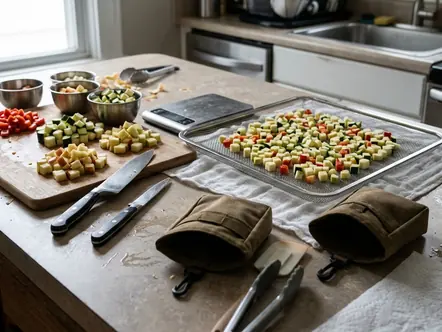
The same principle drives the most useful blend available to a working handler. Mix 1 part diced plain turkey with 4 parts blanched green beans in a sealed bag for 4 hours, give or take, and enough poultry lipid scent transfers onto the beans to maintain consistent drive. The dog smells turkey on nearly every piece while eating mostly vegetable.
Make the Blend Tonight
Dice, blot, bag, and refrigerate in the evening. Tomorrow's session starts with dry, fragrant cubes instead of a soggy pouch.
Here is the recommendation, without hedging. Buy silicone treat pouches that turn fully inside out, and sanitize them in boiling water every evening. Fabric pouches hold onto meat residue and moisture; silicone does not. Then make the turkey and green bean blend your default training mix for every dog in a behavior modification program. It keeps calories in check, holds up in the pouch, and carries enough real-meat scent to keep a dog working through the hardest repetitions. Start with that blend, and change it only when your dog gives you a reason.