How a Sleeping Puppy Holds On to a Lesson
A puppy sits when you ask, takes a treat, then runs off to investigate a shoe. Did the lesson stick? That answer comes later, when the puppy can respond again without needing you to rebuild the cue from scratch.
Cognitive retention is the process by which a puppy’s brain stabilizes a recent learning experience so it can be retrieved as a repeatable behavior. Sleep supports that process. A successful sit during practice shows what the puppy can do in that moment; a sit after rest tells you more about what the puppy kept.
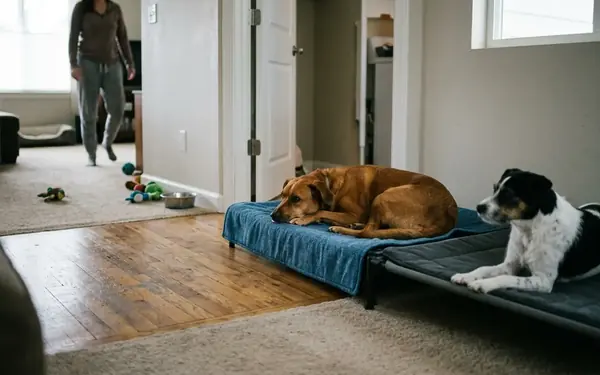
Growing puppies need substantial sleep across the day. Quietly lying beside you offers physical rest, but it does not necessarily provide the uninterrupted sleep cycles that support brain development. REM sleep is one part of those cycles and contributes to processing experience. A puppy who repeatedly wakes to footsteps, television noise, or play invitations may look well rested on a household schedule while missing restorative sleep.
That distinction matters in puppy care. Owners often count exercise and training, then treat the remaining hours as available social time. I find it more useful to plan for protected sleep first and fit brief learning opportunities around it. When a puppy wakes naturally, you can see what the previous lesson left behind.
Rest Versus Sleep
Watch the puppy, rather than the clock alone. A puppy who keeps lifting their head at every sound has a different opportunity to sleep from one who can remain undisturbed. The aim is to give the brain room to move through a sleep cycle, not simply to keep the puppy off their feet.
What a Missed Nap Does to a Training Session
An overtired puppy often looks unusually energetic. They grab sleeves, rush at hands, race between objects, and struggle to pause before acting. That combination is commonly described as over-arousal: the puppy responds quickly to stimulation but has less room for impulse control.
Consider a puppy learning to release a tug toy. Early in the day, they can loosen their grip when play pauses and collect a treat. Later, after guests arrive and the usual nap disappears, the same puppy bites harder and springs back toward the toy. Repeating the cue louder gives the puppy another demand at the point when regulation is already difficult. The more useful training decision is to stop the game and arrange a calm transition to sleep.
Missed nap windows can leave a puppy in a sustained stress-arousal state, with cortisol activity part of that response. Bite inhibition may become less reliable during subsequent play. That does not make every nip a sleep problem: teething, excitement, and the way people play also matter. It does mean that a sudden drop in bite control deserves a look at the day’s rest before you raise the difficulty of obedience training.
Pause the Biting
If your puppy starts catching skin after previously managing gentle play, end the game without a chase or a lecture. Give them a quiet route to their sleep space and revisit bite-inhibition practice after they wake.
Sleep loss can also interfere with memory formation. A tired puppy may perform a familiar cue inconsistently and have little capacity to absorb a new one. Marking every missed response as disobedience hides the useful question: can this puppy attend, settle, and recover well enough to learn right now?
What Rest Can Reveal About Obedience Learning
In veterinary and training settings, the useful observation is often qualitative: compare how a puppy responds to the same cue after protected sleep and after a stretch of continued activity. Look for a prompt response, the amount of help required, and whether the puppy can repeat the behavior without escalating excitement. A rested puppy may acquire a cue more readily because they can attend to it and return to it later.
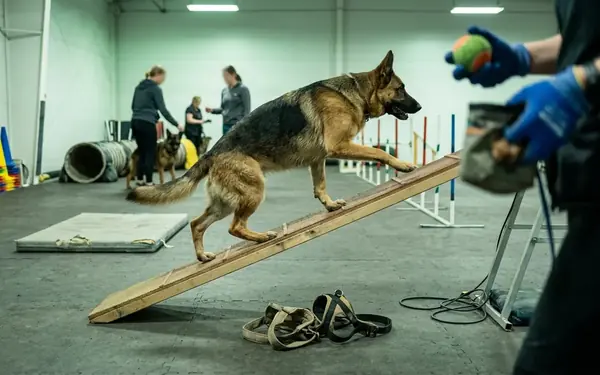
Here is a practical comparison. Teach “down” in a short, calm session, then let the puppy sleep without household interruptions. On the next waking period, ask once in the same familiar space and note whether they move toward the floor before you lure them. On another day, if ordinary life keeps them active after practice, record that context too. The point is to observe cue reliability across different recovery conditions, not to keep a puppy awake to create a test.
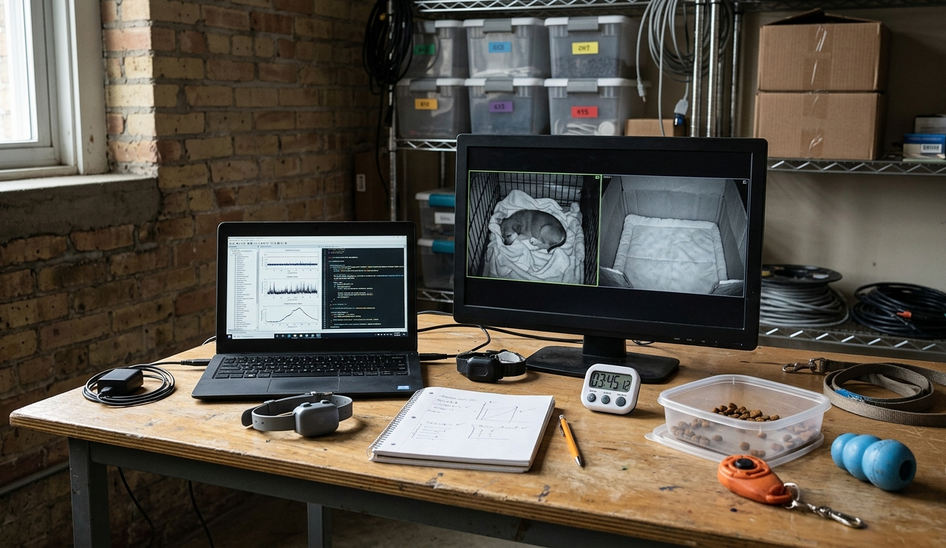
Rest after practice gives a recent experience an opportunity to consolidate. Continuing straight into rough play adds stimulation and competing experiences. For a new cue, a brief practice followed by uninterrupted sleep is a sensible routine to test against a longer session that leaves the puppy wound up.
Scope matters here: these comparisons can guide one puppy’s schedule, but they do not establish a universal sleep requirement or a precise rate of memory consolidation. Age, temperament, discomfort, and the difficulty of the cue can all change what you observe. Giant-breed puppies may need a greater allowance for sleep and physical recovery, including joint recovery, than toy-breed puppies. That can leave fewer comfortable training windows without changing the basic reason to protect sleep after learning.
Measure the next response rather than judging the session by how many repetitions you completed. A puppy who wakes and offers the cue with less help gives you a stronger sign of retention than a puppy who managed many repetitions while visibly fading.
Build the Nap Into the Training Plan
Enforced naps work best as a predictable transition, not a contest over confinement. The training session ends while the puppy can still respond and take food gently. From there, the household helps them shift from activity to sleep.
- Choose one small objective. Practice a familiar cue or introduce a single new movement in a quiet area. Stop while the puppy can still engage calmly.
- Close the session gently. Put away treats and toys, offer a routine toilet opportunity if needed, and avoid a burst of chase or wrestling on the way to the sleep area.
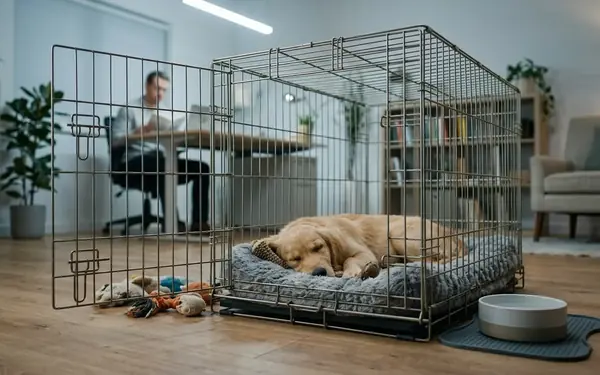
- Use a familiar resting place. Guide the puppy to a crate they have learned to enter comfortably, or to a designated sleep area. If the crate itself causes distress, address that separately rather than expecting exhaustion to solve it.
- Protect the sleep period. Ask household members to leave the puppy undisturbed. Resume interaction when the puppy has had a meaningful chance to sleep and wakes ready to engage.
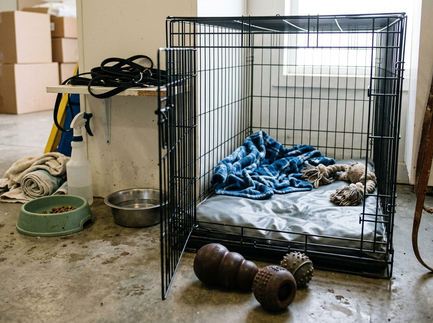
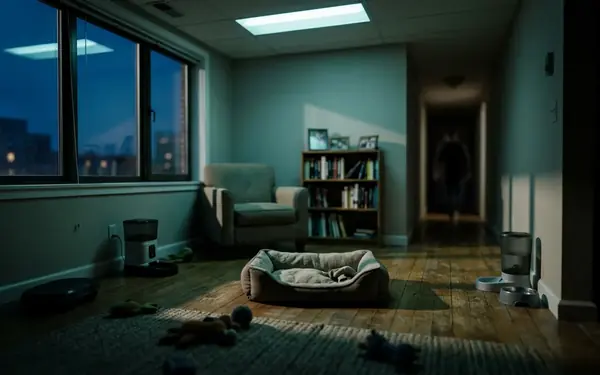
The room does some of the work. Keep it comfortably cool, reduce glare, and choose a place away from frequent traffic. A breathable cover can soften light around a crate while preserving ventilation. Check that the puppy can settle comfortably and that any bedding suits their stage of chewing.
Sound placement matters as much as sound choice. Placing a white-noise machine directly beside a crate can make the sleep area more intrusive. Positioning a sound buffer nearer the room entrance may mask household movement without putting the source at the puppy’s ear. Adjust the setup by watching whether the puppy settles and stays asleep, rather than assuming the device helps because the room sounds quieter to you.
Protect the Crate
Keep play, repeated check-ins, and household traffic away from a puppy’s sleep space. A covered crate still needs airflow, a comfortable temperature, and a puppy who feels safe inside it.
Other people need the plan too. A puppy may settle beautifully until someone opens the crate for a quick cuddle. Agree on what a sleeping puppy means in your home: let them sleep, and save the greeting for when they wake.
Let the Sleep Log Set the Next Cue
A useful sleep log stays simple enough to maintain. Note when your puppy wakes, when training starts, which cue you practice, when they settle, and whether sleep is interrupted. Beside each session, record what happened on the first cue after the next rest period. “Sat after a hand signal” tells you more than “good session.”
Look for patterns over successive days. Does your puppy learn readily soon after waking, then begin grabbing the leash or missing easy cues later in the waking period? Do interruptions precede rougher play? If the same cue improves after a protected nap, keep that sequence and adjust the next session’s timing. If the cue remains difficult even when the puppy is rested, simplify the task instead of prescribing more sleep as the only answer.
Include relapse benchmarks in ordinary language. Record when a cue that had become reliable needs a lure again, and check what changed: sleep, setting, distractions, or the behavior you asked for. This keeps behavior modification tied to observable conditions and helps you make fair decisions for the puppy.
Count Recovery
Log the rest that follows a lesson alongside the lesson itself. Cue reliability after sleep is the outcome worth watching.
The practical shift is small but consequential. Active training and recovery belong in the same obedience curriculum. A short session can give your puppy a clear experience; protected sleep gives that experience a better chance to remain available when you ask again.
Are you structuring your puppy’s day around their need to learn, or merely their capacity to stay awake?