Why Shelby County’s Midnight Vet Call Now Starts With a Referral
Years ago, a midnight veterinary emergency often meant calling the neighborhood clinic and meeting the veterinarian at a back door. Across the Memphis area, small practices shared on-call duties, and the same veterinarian might handle evening emergencies before returning for morning appointments.
Overnight care has since moved toward dedicated emergency hospitals. Continuous patient monitoring, in-house laboratory equipment, and intensive-care nursing require a different staffing model from a daytime appointment schedule. That shift changes the emergency plan for households in Collierville, Germantown, Bartlett, Cordova, and the rest of Shelby County.
Your familiar clinic may direct nighttime patients to a regional facility near the I-240 loop or Summer Avenue corridor. The closest veterinary building may therefore be the wrong destination after closing time.
That distinction matters most when your dog is struggling to breathe or cannot stand. Searching for an open hospital while someone carries a distressed dog to the car creates several opportunities for delay: an outdated directory entry, a locked clinic door, or a navigation route aimed at the wrong branch.
A useful emergency plan settles three questions before the crisis: Who is accepting patients, where should you enter, and who will drive? For households farther from central Memphis, the drive itself deserves the same preparation as the phone call.
Keep the plan shared. Every adult who handles puppy care, dog walking, or overnight pet sitting should know where it lives. A saved number on one person’s locked phone leaves the rest of the household guessing.
Which Nighttime Symptoms Mean Leave for Emergency Care?
Describe what you can see. “Her abdomen looks swollen and she keeps trying to vomit without bringing anything up” gives a triage team more useful information than “she seems off.” Physical observations help staff assess urgency while you prepare to travel.
Signs That Require Immediate Action
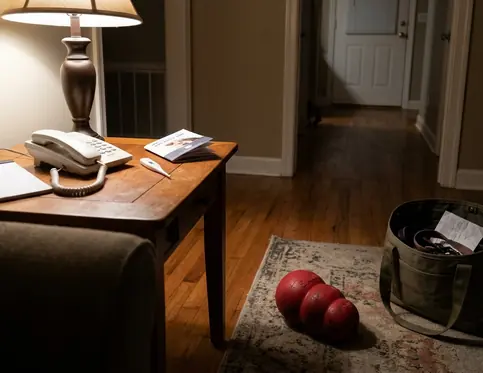
Arrange immediate emergency evaluation for these signs, and call the receiving hospital as you prepare to leave:
- Repeated unproductive retching with a swollen abdomen: this combination can indicate gastric dilatation-volvulus, commonly called GDV or bloat.
- Pale, gray, or blue-tinged gums: report the color change immediately, especially alongside weakness or abnormal breathing.
- Labored breathing at rest: look for pronounced abdominal effort, open-mouth breathing unrelated to ordinary panting, or difficulty settling comfortably.
- Collapse, uncontrolled bleeding, or seizures: tell the team whether your dog is conscious, breathing, and still showing the symptom.
- Known or suspected toxin ingestion: call promptly with the substance, possible amount, and exposure time; have the packaging available.
Do not postpone departure to complete a home examination. The AVMA’s 13 animal emergencies that require immediate veterinary consultation and/or care provides a useful reference for recognizing situations that need immediate attention.
When a Morning Appointment May Fit
An isolated vomiting episode followed by normal energy, a superficial scrape, mild intermittent limping, or ear shaking may fit a morning appointment when your dog otherwise remains comfortable and stable and telephone triage agrees. Tell the clinic about changes in breathing, alertness, mobility, and repeated symptoms before deciding to wait.
Take vomiting as an example. A dog that vomits once and then rests comfortably presents a different picture from a dog repeatedly retching, pacing, and developing abdominal swelling. Give the triage team that sequence in order. Avoid compressing both situations into “stomach trouble.”
Record Your Dog’s Comfortable Baseline
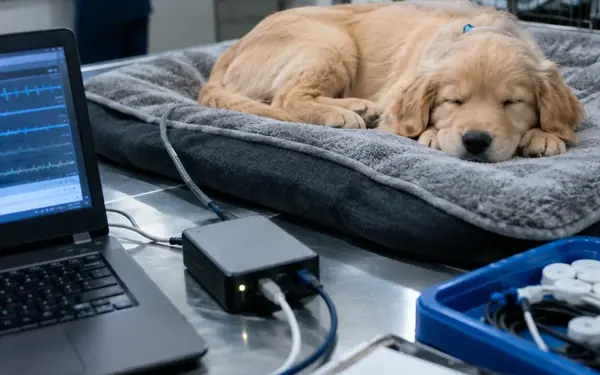
During a quiet evening, watch your sleeping dog in a cool room. Count each complete chest rise and fall as a breath, record breaths over a full minute, and note whether breathing looks easy. Save the observation with the date and circumstances so you can describe a meaningful change later.
Ask your regular veterinarian to demonstrate a gum check during a routine visit. On accessible pink gum tissue, gentle pressure briefly blanches the surface; capillary refill describes the return of pink color after release. Record the appearance of healthy gums alongside your breathing observations.
Darkly pigmented gums make home capillary-refill checks unreliable, so ask your veterinarian to demonstrate an appropriate alternative rather than using a gum check to decide whether travel can wait.
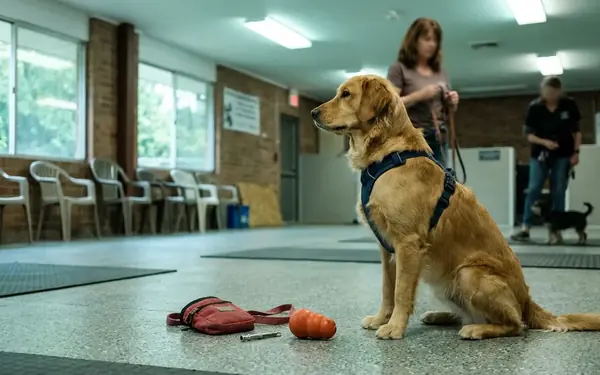
Practice only while your dog is comfortable. Cooperative handling developed through reward-based obedience training can make routine observation easier, but a distressed dog needs prompt help rather than a handling lesson.
Ask Emergency Hospitals How Overnight Intake Actually Works
Call prospective emergency facilities during a quiet daytime period. Hours, staffing, and intake capacity change, so verify operations directly instead of relying on a static directory or an old social-media recommendation.
A productive call establishes the hospital’s actual service pattern. “Open late” and “staffed continuously overnight” describe different arrangements, particularly when a dog needs hospitalization.
Questions Worth Saving With Each Contact
- Do you accept emergencies continuously, or only during specified evenings and weekends?
- Does a veterinarian remain on-site overnight? Do technicians remain with hospitalized patients?
- Can a hospitalized dog stay through the following day, or will an early transfer be necessary?
- Which number should we call immediately before arriving?
- Where is the after-hours entrance, and how do we request help moving a dog from the car?
- What happens if you reach capacity, and which facility should we call next?
- How do emergency examination fees, stabilization authorization, and payment at intake work?
- How will you send treatment records and test results to our regular veterinarian?
Record the answers and the date you confirmed them. Ask the same operational questions of your backup hospital; a second map pin provides little protection if that facility also closes overnight.
Call Before the Car Arrives
Make a pre-arrival call part of every emergency departure. Advance notice lets the team prepare for a breathing emergency, arrange immediate assessment, or redirect you when staffing or caseload requires diversion.
Keep the opening report brief: your dog’s main symptom, whether the dog is conscious and breathing comfortably, your location, and your estimated arrival. Then follow the intake team’s questions. A passenger can handle the conversation while the driver concentrates on the road.
Keep financial preparation practical, too. Ask about current intake requirements before an emergency and decide how your household will authorize care. Save that information beside the clinic number so the person transporting your dog can act without searching through messages.
Build a Phone-and-Car Plan for the Drive Across Shelby County
I keep emergency preparation organized around the handoff: the person driving needs a destination, the person calling needs a concise history, and the receiving team needs to know what is coming.
Build your household’s plan around those same tasks so it remains usable when your attention is on your dog.
Put the Essential Information Within Reach
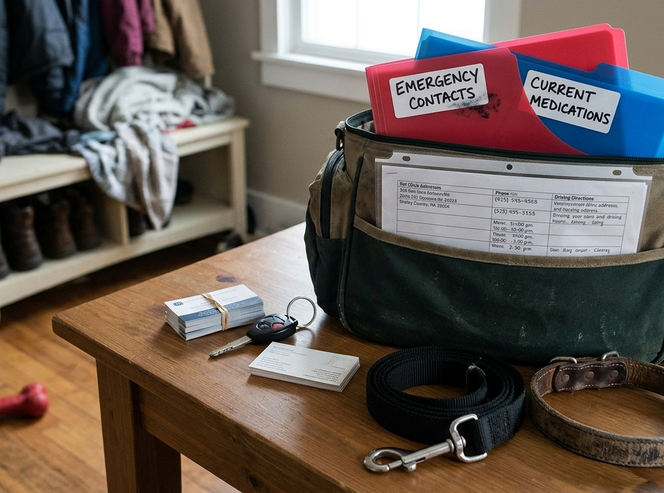
- Save a primary emergency hospital and a backup in phone favorites. Include the verified intake number, street address, and entrance instructions.
- Save national animal poison-control contacts. Obtain current hotline details through your veterinarian and keep them beside the hospital contacts.
- Create a shared medical folder. Include vaccination records, diagnoses, allergies, current medications and doses, and your daytime clinic’s contact information.
- Keep an offline copy. Download the essential records and print the clinic addresses so a weak signal or depleted battery does not erase the plan.
- Assign household roles. Decide who drives, who calls, and who manages other pets or children during departure.
Use plain filenames such as “Current medications” and “Emergency contacts.” Update the medication list whenever treatment changes. For dogs receiving behavior modification medication, include that medication alongside prescriptions for other health needs.
Pack for Safe Handling
Keep a thick blanket or towel, a soft muzzle or gauze roll, a spare slip lead, and printed destination details together in the vehicle. Even a gentle dog may bite when severe pain or fear changes its response to touch.
A blanket can help support an immobile dog during a coordinated lift. Ask the emergency team for handling instructions before moving a dog with suspected spinal injury or severe abdominal pain, and arrange another adult’s help when available. Tell the hospital if you will need assistance at the car.
Keep Airways Clear
Never use gauze or a soft muzzle on a dog that is retching, actively vomiting, struggling to breathe, or experiencing brachycephalic airway distress. Restricting the mouth can obstruct breathing or prevent vomit from escaping. Tell the emergency team about any bite risk and request handling instructions.
Store the kit where someone can retrieve it without unloading the trunk. A familiar blanket also gives the household a designated transport item instead of sending someone upstairs to search for bedding.
Map a Surface-Street Alternative
Review the route from home to both hospitals, including trips that normally use I-40, I-240, or Bill Morris Parkway/TN-385. Overnight paving and bridge work can change access to an interchange, and navigation apps can lag behind newly placed barriers.
Identify a surface-street alternative using roads such as Poplar Avenue, Walnut Grove Road, or Stage Road where they fit your destination. For a household leaving Collierville or Germantown, recognizing the appropriate east-west corridor beforehand reduces last-minute route decisions.
Check current conditions before departure and follow posted closures. Have a passenger manage any rerouting.
Connect Overnight Treatment With Your Regular Vet’s Morning Care
The emergency visit creates a second handoff: from the overnight team back to your dog’s regular veterinarian. Clear records help the daytime clinic understand which medications were given, which tests were completed, and what monitoring remains necessary. They also help avoid unnecessary repeat testing.
At your next routine visit, ask how your clinic receives emergency discharge summaries, laboratory results, and diagnostic images. Confirm the receiving email or transfer process with the emergency hospital, and request your own copy of discharge instructions.
If overnight hospitalization becomes necessary, ask who will coordinate any morning transfer. Some emergency-only facilities close during the day, so establish the discharge arrangement and confirm that the receiving clinic can accept your dog. Let the treating teams direct transport when ongoing fluids, pain relief, or monitoring are involved.
Call your regular veterinary clinic today, ask which specific emergency facility it uses for overnight referrals, verify that facility’s current hours and intake number directly, and save both clinics’ numbers in your phone favorites.