Why a Forty-Five-Minute Sidewalk March Leaves a Dog More Wired
Why does a high-energy dog often come home from a brisk, forty-five-minute neighborhood walk just as restless as when the door first opened? Many handlers expect a 45-to-60-minute sidewalk march to drain the tank. The dog's behavior afterward tells a different story: pacing, mouthing, and a fast return to the window.
Part of the answer is speed. A human walks at roughly 2.5 to 3 miles per hour in a straight line. An unrestricted medium-to-large dog moves in a different rhythm. It alternates between a 5-to-6-mile-per-hour trot and full stops of 15 to 45 seconds at each scent patch. The sidewalk walk blocks both ends of that range. The dog cannot trot freely, and it cannot stop long enough to finish investigating anything.
The leash adds a second problem. On a standard 6-foot flat lead, the handle loop takes up some length, and so does the vertical drop from the handler's hip to the dog's shoulders. What remains is less than 42 inches of usable horizontal radius. Inside that small circle, the dog meets the end of the leash constantly. Handlers respond with micro-corrections every 10 to 15 paces, and each tug keeps the dog in a state of reactive vigilance.
Then come the streets themselves. Passing dogs, delivery trucks, narrow walkways squeezed between parked cars and hedges: every one of these registers as something to monitor. Together with steady leash tension, they stack up. The dog returns home aroused, with little genuine physical or mental tiredness to show for the walk.
What Slow, Self-Directed Sniffing Does to a Dog's Nervous System
Sustained sniffing calms dogs, and the mechanism is physical. During focused scent work, a dog cycles through rapid nasal inhalations at 4 to 7 sniffs per second. That activity engages the vomeronasal organ and moves nervous system dominance away from sympathetic arousal, the fight-or-flight state that busy sidewalks keep switched on.
Brisk walking builds cardiovascular exertion. Heart rate climbs and breathing quickens, and in a stimulating setting that exertion often blends with excitement instead of releasing it. Slow or stationary scent processing in a low-traffic area produces the opposite pattern: autonomic regulation, steadier breathing, and a body that stops bracing for the next surprise.
Space determines whether that shift can happen at all. A slack 6-foot lead gives a dog roughly 38 square feet to explore. A 15-to-20-foot line expands that to between 700 and 1,250 square feet, and the handler does not need to change pace. Within that radius the dog chooses direction and speed. The constant corrections that frustrate both ends of the leash largely disappear, because the dog rarely reaches the limit.
Time the Sniffing
Swap the success benchmark. Track how long the dog keeps its nose working without interruption in a quiet zone, and stop counting miles or minutes walked. A short outing with long, unbroken sniffing stretches does more for recovery than a long march.
Back-Clip Harness Fit, Line Material, and Two-Handed Slack Control
Why the Attachment Belongs on the Back
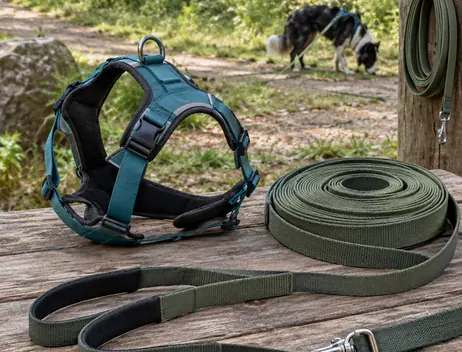
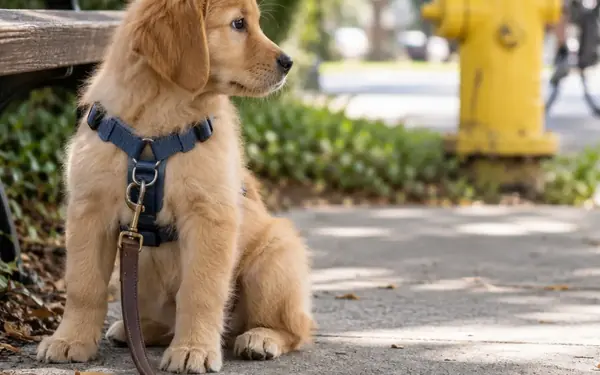
Longer lines bring higher speeds. A 60-pound dog accelerating across a 20-foot radius can reach 15 to 18 miles per hour before hitting the end of the line. On a flat collar, that sudden stop loads the cervical spine and presses against the trachea. A Y-front, back-clip harness spreads the same force across the sternum and shoulders. Front-clip attachments cause a separate problem on long lines. Slack line drapes forward and tangles around the front legs, which can trip a dog at speed.
Earn the Open Field
Harness design protects the neck, yet it does nothing for the handler's grip. A dog with a history of chasing wildlife or lunging at bicycles needs a preliminary braking cue and a handler-focus protocol first. Practice those on a 10-foot line inside a fenced enclosure. Moving to an unfenced 20-foot setup comes afterward. For a 60-pound dog with unaddressed predatory lunging, 20 feet of runway generates more force than hands can safely brake, even with a well-fitted Y-front harness.
Biothane Versus Flat Nylon in Wet Grass
Standard 3/4-inch flat nylon webbing performs poorly on dewy morning fields. Within about 15 minutes, the fabric soaks up mud and moisture. Its weight doubles, and wet nylon sliding through bare palms causes painful friction burns. Waterproof biothane in 3/8-inch or 1/2-inch widths holds no water. It also resists snagging in brush and glides around tree roots and fence posts. In mud, biothane wipes clean, while nylon stays caked and stiff.
Feeding Out and Gathering the Line
The anchor-and-shuttle method keeps the line under control with two hands:
- Anchor the handle in the dominant hand, held at hip height. Never wrap the line around a wrist or fingers.
- Let the other hand shuttle along the line, feeding slack out as the dog moves away.
- Reel line back in hand-over-hand as the dog returns or turns toward a hazard.
- Keep active slack between 3 and 6 feet, held off the ground, so no deep loop drags under paws.
Choosing Ground With Clear Sightlines
Good locations share one trait: the handler sees trouble well before the dog reaches it. Open fields, quiet park corners, and wide utility easements all qualify. Hold a buffer of at least 50 feet from blind corners, dense brush lines, and pedestrian paths. That distance gives time to gather line before a jogger or off-leash dog appears.
Reading the Shift From Wired to Settled
Settling shows in the body, and it takes time to appear. Most high-drive dogs spend the first 8 to 12 minutes burning off threshold excitement. Splitting the outing into intervals helps handlers notice the change when it arrives.
Early in the walk, look for these high-arousal signs:
- Head carried above the withers, scanning hard
- Ears pinned back or held rigidly forward
- Wide, pulled-back commissures with a spatulate tongue and rapid panting
- Frantic darting between spots, under 2 seconds of sniffing at each
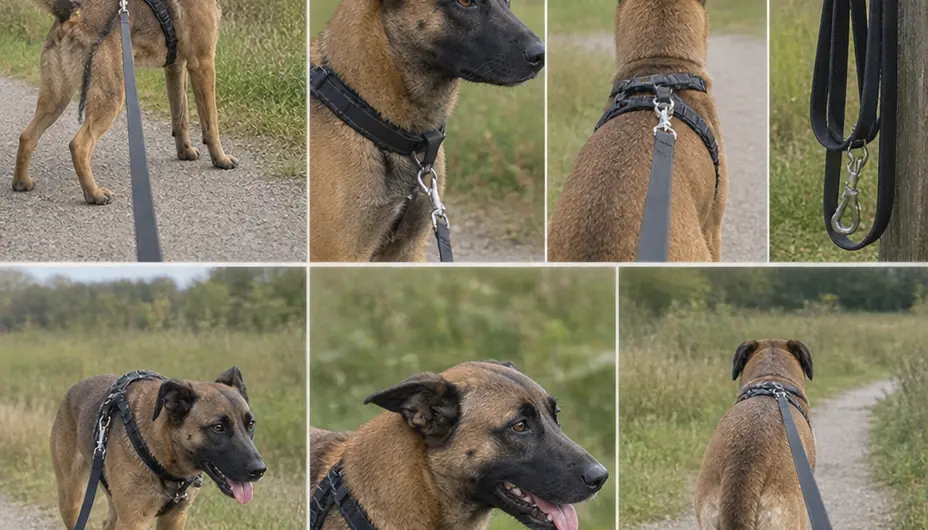
After 10 to 15 minutes in a low-stimulus setting, genuine decompression usually takes over:
- The neck drops level with the thoracic spine
- Ears soften and the tail swings loosely
- The mouth closes, and breathing moves through the nose with audible snorts
- Movement between scent patches slows to a meander
- Full-body shake-offs of 2 to 3 seconds follow intense investigation
Watch the Head Line
A head carried level with the spine is the clearest single marker. Once it appears and holds, the dog has crossed from scanning the environment to processing it.
Stride mechanics explain why the long line matters so much. A dog's natural trot runs at roughly twice the speed of a human walking stride, so on a tight 6-foot leash it must cut every step short. A 20-foot line lets the dog finish a full stride cycle, then stop completely and spend half a minute on a single blade of grass while the handler keeps walking at an ordinary pace.